Teachmeet International Bett 2026
Here you find the line-up of speakers presenting at the International Bett Teachmeet, hosted by Arjana and Bart.

Alma Šuto
Croatia
From Tradition to Innovation: Creative AI in Education

Mi Yung Hong
South Korea
A Six-Dimensional Framework for Human Flourishing
Dr. Mi Yung Hong is an appointed professor at Korea National University of Education (KNUE), where she specializes in research strategy and future innovation planning for teacher education and educational policy. She is the scientific and pedagogical advisor of JSflux’s EduFellow platform and leads Korea’s Glocal University Initiative, developing institutional transformation frameworks to connect local, industry, and academic partnerships, and planning AI-integrated teacher education models at the national level. She holds a Ph.D. in Educational Administration and an M.Ed. from Ewha Womans University, as well as an M.A. in Education Policy & Society from King’s College London. Her academic and policy expertise spans school governance, teacher policy, AI-driven instructional design, international comparative education, and school violence prevention. Previously, Dr. Hong served as a full-time research professor at KNUE’s Convergence Education Institute, and as a lead research professor at Ewha’s Institute for School Violence Prevention, where she led national education policy projects. She was also a senior researcher and project leader for the Presidential Commission on National Integration, and participated in numerous national research projects through KEDI, local education offices, and national policy foundations. With over 20 peer-reviewed publications, Dr. Hong has contributed significant scholarship in comparative education, policy innovation, and teacher education. Her work has been presented at national and international forums hosted by UNESCO, Korean Educational Administration Society, and The Education University of Hong Kong, among others. She is currently expanding global collaboration networks through future education and classroom projects. Dr. Hong’s career began as a secondary school teacher under the Gyeonggi Provincial Office of Education, which grounds her academic work in strong field-based insight and dedication to educational equity and innovation.

Ivana Rako Vuksan
Croatia
English classroom as a stage for empowering pupils' skills
Ivana Rako Vuksan is an English teacher mentor with 17 years of experience at Primary School Zmijavci, Croatia. She has created and worked on numerous eTwinning projects as well as developed and fulfilled Erasmus+ KA1 and KA2 projects and Accreditation at her school.
She likes learning as well as sharing ideas and examples of good practice. She focuses on innovative teaching methods, integrating technology into teaching to enhance learning and wellbeing.
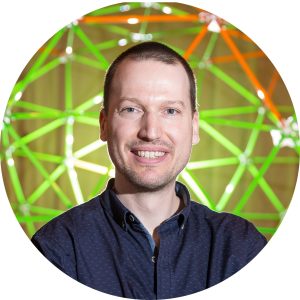
Kristof Fenyvesi
Finland
The Future of Our “Future Classrooms” and Education’s Planetary Responsibility
Kristóf Fenyvesi, Ph.D. is a Senior Researcher in STEAM education at the Finnish Institute for Educational Research, University of Jyväskylä, where he coordinates the international activities of the Innovative Learning Environments research group. He holds adjunct, associate, and visiting professorships at the Korea National University of Education, Indonesia University of Education, University of Milano-Bicocca, Tallinn University, Hang Seng University, and Hong Kong Metropolitan University. As the Overseas Director of the International Society for the Advancement of STEAM (ISAS), Dr. Fenyvesi promotes integrated, creative, and inquiry-based learning. He is a core member of the STEM Special Interest Group at the Education University of Hong Kong’s Global Research Institute for Finnish Education. Fenyvesi is a member European Commission’s Education for Climate Coalition. He serves as a focal point in Finland for UNESCO Chair on Sustainability in Education at INLAND Norway University, and also contributes to digital transformation initiatives in education as Assistant to the UNESCO Chair on Digital Platforms for Transforming Economies at Lappeenranta University of Technology in Finland. He actively contributes to international science outreach, serving on the European Mathematical Society’s Committee for Raising Public Awareness. He is also the founder of Experience Workshop—Global STEAM Network, which bridges mathematics, the arts, and education to inspire innovation in teaching and learning. Dr. Fenyvesi has served as an evaluator for the European Commission, the Slovak Accreditation Agency for Higher Education, and the Science Fund of Serbia. He is a regular keynote speaker at global conferences and a contributor to numerous scholarly publications, advancing the discourse on interdisciplinary and creative approaches to STEAM education.
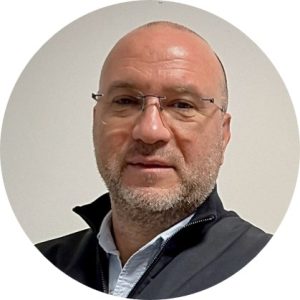
Celestino Magalhães
Portugal
Gamification Through Immersive Learning Environments
Celestino Magalhães, Assistant Professor and Coordinator of the Postgraduate Program in ICT: Hybrid Learning Ecosystems at ESDE – School of Sports and Education at the Piaget Institute of Vila Nova de Gaia.
Member of the Scientific Committee of the Postgraduate Program in ICT: Hybrid Learning Ecosystems.
Master in Information Systems and Master in ICT – Information and Communication Technologies: Multimedia Specialization.
He is currently completing his doctorate in Educational Sciences, specializing in Educational Technology, at the Institute of Education of the University of Minho.
He is a researcher at the Center for Research in Education at the University of Minho (CIEd) and at INSIGHT – Piaget Research Center for Ecological Human Development, at the Piaget Institute. He is the author or co-author of several books and book chapters, including the DGE’s “Recommendations for Promoting Digital Well-Being in Schools.” His areas of expertise, research interests, and scientific production include: Artificial Intelligence; Virtual Reality and Augmented Reality; Mobile Technologies and Learning; Pedagogical Innovation; Digital Storytelling; Gamification; Flipped Learning; Curriculum and Technologies; e-learning; Computational Thinking; Educational Robotics, among others.

Maja Videnovik
North Macedonia
Transforming Cybersecurity Learning into an Adventure
Maja Videnovik is a computer science teacher and teacher-mentor at primary school “Krste Misirkov”, Skopje, and co-founder of the NGO Center for Innovations and Digital Education Dig-Ed. She holds a PhD in the field of computer science and engineering, and her research, including high-impact publications on game-based and AI-powered learning, directly informs practice in schools.
A pioneering educator and EdTech innovator, Maja has extensive experience in driving transformation in digital education. She has been a trainer on innovative use of technology in education, strengthening digital competencies and media literacy of teachers, developing critical thinking, problem-solving and coding skills for teachers and students. Her latest trainings focus on integrating artificial intelligence, transforming learning through gamification, and promoting cybersecurity awareness in education.
A Fulbright TEA Fellow, Microsoft Innovative Educator Expert, Micro:bit Champion, CodeWeek Leading Teacher, DigiEduHack Ambassador and Scientix Ambassador, she combines classroom excellence with international leadership.
Through Dig-Ed, Maja supports teachers’ professional development, helping them create engaging, technology-enhanced learning environments that spark curiosity, foster creativity, and drive student success.

Fenia Kouvara
Greece
From Classroom Conversations to Podcast Voices
Fenia Kouvara is an educator with over 30 years of experience teaching English as a foreign language. She is the co-owner of Planet Language School in Thessaloniki, Greece, where she has been developing student-focused learning for the past 25 years.
She creates projects that bring students together through inquiry, creativity, and collaboration — including the award-winning Creating Connections annual student festival and GenZtoA, a student-led podcast across four schools.
Her work focuses on empowering learners through voice and choice, with a strong emphasis on real-world communication and ownership. Passionate about building community through education, Fenia supports teens in becoming reflective thinkers, confident speakers, and active participants in their learning journey.

Ádám Horváth
Hungary
Reading literacy, AI readiness, and future employability
Ádám Horváth is a specialist in pedagogical transformation, committed to developing dynamically adapting instructional methodologies. He has designed competency frameworks that facilitate the monitoring of learning achievements and the assessment of educational outcomes. As one of Hungary’s first CodeWeek ambassadors, he contributed to the launch and institutionalisation of the Digital Thematic Week. He currently serves as the professional lead of the HighTech School Program and is engaged in creating an AI-driven competency parser capable of benchmarking curricula, training programs, and certifications. His work centres on defining the competency structures and literacy thresholds necessary to ensure learners can engage with artificial intelligence in a secure, informed, and productive manner.